
Cat People
My wife and I watch a horror classic

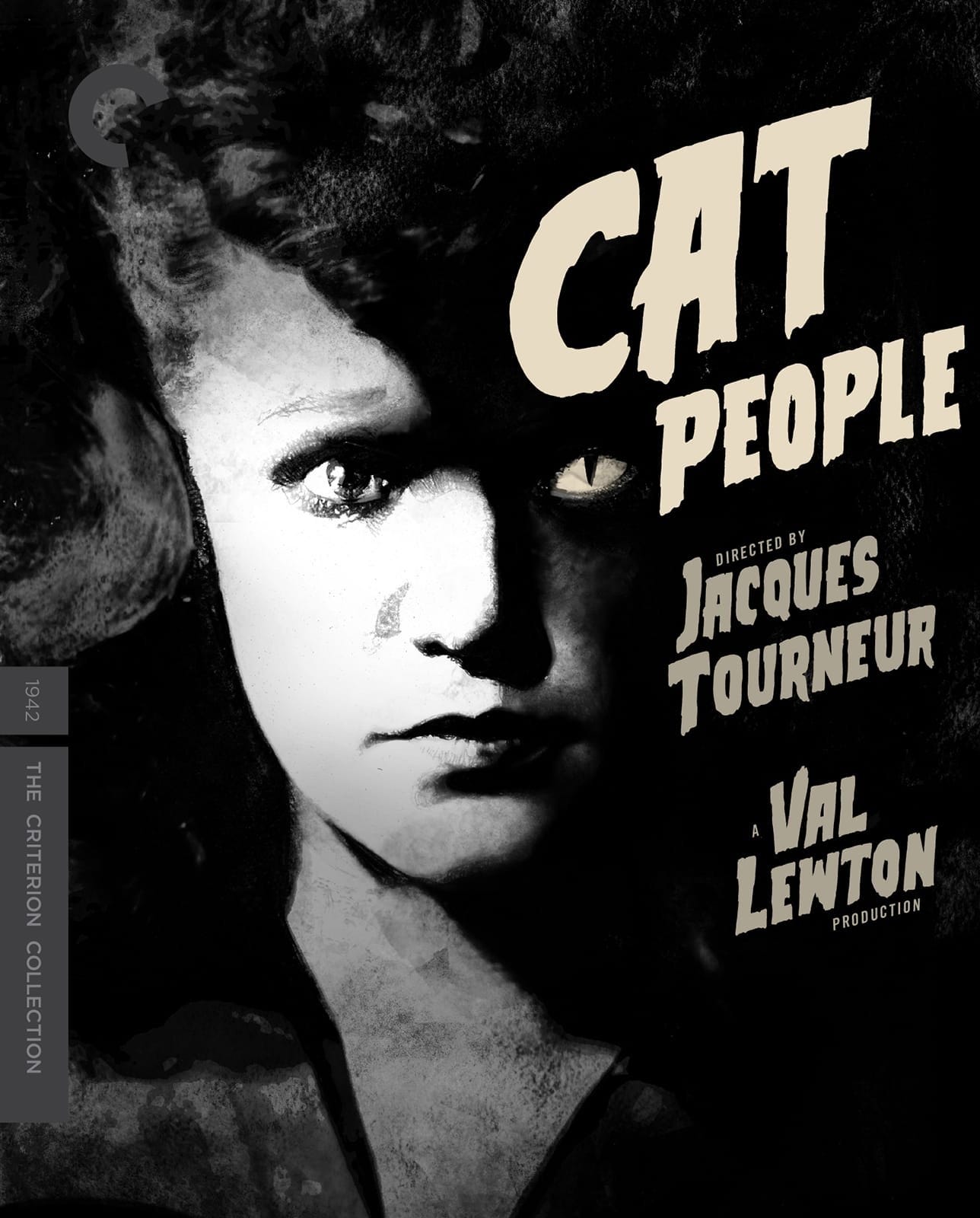
My wife and I have found a new shared interest: classic movies. It probably started when we watched It’s a Wonderful Life together over Christmas. Then, a little later, I browsed the public library and spotted a copy of Casablanca, which I had never seen. This post isn’t about either of those films. This post is about what I found next to Casablanca on the shelf: a 1942 horror film called Cat People. The title sounded goofy; the box art featured a woman with cat-like eyes. I wondered if this was a horror film about women turning into cats, which was only scary at a time when people still hadn’t figured out that movies aren’t real. It was, however, a Criterion DVD (this library has a large number of these, along with several Knoll Studio lounge chairs, two items that aren’t obviously connected except that they feel like decisions made by the same type of personality), and that little gray C says it is “important.” I took it home not knowing what it would be.
Good, it turns out. Cat People is about a young woman, Irena, from a Serbian village that fell from the practice of Christianity to the dark arts, specifically learning to turn themselves into cats. A Christian king, King John, drove them from the village, but some “cat people” survived. She believes that she is descended from them, and as such thinks if she ever is intimate with a man she loved (kissing was enough) she would turn into a cat and kill him. She meets an American man, Oliver, at the zoo, where she is sketching in front of the jaguar cage. They fall in love quickly and get married.
Irena still believes in the curse, so she will not as much as kiss her husband until she feels safe from it. Oliver is pretty tolerant of this, but gets impatient after some time. It seems to him that Irena is afraid of an old world superstition, and this is America in the 20th century. That stuff isn’t real here! And it seems to him that she just keeps her fear alive. Her apartment is full of pictures of cats, she keeps spending time at the zoo watching the jaguar, and the most important decoration in her home is a statue of “King John” with a cat impaled on his sword. Impatient, and probably horny, he decides that she is just keeping her fear alive, and sends her to a psychiatrist.
The medium of black and white film practically forces a movie to think about themes of light and dark. Cat People doesn’t resist the temptation. The subtext to all of this ancestral curse stuff is a story of repression, as Irena makes a forceful effort to repress her desire for Oliver and to repress the power that she could have. She spends the first part of the movie dressed in light clothing, but works on a drawing of a woman in a striking all-black dress. Slowly, she begins to dress in the same way. The cat she watches at the zoo is a black jaguar; she twice has an opportunity to let the animal out of its cage because the absent-minded zookeeper leaves the key in the cage’s lock. The film uses light and shadow to underscore these ideas, with the suggestiveness of darkness often giving way, sharply, to the safety of light.
Here’s the image of Irena being hypnotized by the psychiatrist:
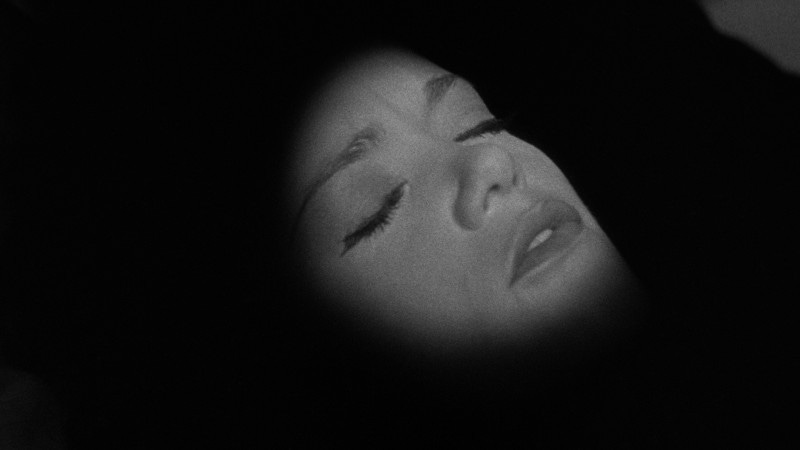
Her face is an island of light in a sea of darkness; the image of goodness that she shows the world could at any moment be submerged by desires barely kept outside the circle of light. This was the image that really grabbed hold of my imagination.
As soon as Oliver said “psychiatrist,” I knew that doctor would be bad news (perhaps reflecting our different cultural backgrounds, as soon as the American characters confidently dismissed the cat people legend as superstition, my wife knew they should be more afraid of the devil). Psychiatrists just do not have a good track record with women, especially women who struggle with being good wives. They either sleep with their patients, or medicalize normal human reactions as “hysteria” and try to medicate, institutionalize, or lobotomize their patients into normalcy. But upon reflection, I do generally find psychiatrists menacing. Perhaps a psychiatrist would find that interesting.
Dr. Judd, at first, is ineffectual. He explains Irena’s fears in terms of childhood trauma and a subconscious death drive. We all want to unleash destruction into the world; Irena experiences this through her belief that she will turn into a predatory cat. I think now, maybe more than back when Cat People first came out, audiences have a stronger sense that this Freudian stuff is no more a scientific explanation for human behavior than stuff about curses and spirits; in this case, Dr. Judd’s rationality looks very silly against the mounting evidence that Irena really has cat powers.
There are desires other than love. Oliver makes the mistake of confiding in his assistant, Alice, that he has sent Irena to a shrink, and that he isn’t so sure that he loves her. Alice has been waiting for this news, because she always loved Oliver. She makes a stray comment to Irena about the psychiatrist, which tells Irena that Oliver has been telling her business around. Suspecting Alice is trying to steal Oliver, Irena stalks her after work:
There’s Irena, dressed all in black, and suddenly there’s nothing behind Alice except shadows. We later see Irena at home, looking disheveled, thrown off by letting her desire for revenge take hold of her. This is the part of Cat People that holds up really well today. Instead of putting Irena in a bad cat person costume, it uses shadows to suggest something stalking Alice from the dark. Here’s another scene, this time with Irena appearing more self-assured than before; she’s laughing, in fact, at her victim:
Eventually, Irena learns that Oliver plans to divorce her and marry Alice, and that the psychiatrist has been lusting after her the entire time (at this point, my wife had been calling Oliver a bum, and she never liked Alice). She lets the panther out of its cage.
Cat People includes a reflection on the powers of God and the devil that felt out of place for me. At the zoo, the zookeeper tells Irena that the panther is some kind of symbol of Satan. Her village story also associates the cat people with the devil. I found that stuff fun as far as it established a tension between the confidence of the modern, American characters, and the superstitious old world Irena. It plays with the idea that we really should not dismiss old superstitions. But it also gets us a hokey moment where Oliver protects himself and Alice from Irena in cat form by grabbing a T-square (he’s an engineer) off the wall, brandishing it in front of him like he’s performing an exorcism or warding off a vampire, and saying “By the power of God, leave us!”
Oliver, to me, represents overconfident rationality. For him to turn Van Helsing felt odd. Maybe in the dark, with evil staring us in the face, we forget that we’re modern people. It is telling that Oliver only really appears to hold a cross in his shadow.

The movie’s guiding worldview is Freudian. It’s all repressed desires. The Satan stuff feels clumsily conflated with it. Irena isn’t really evil, though the curse is real. Goodness is not repression, and giving ourselves over to desire is not exactly evil. This is the same reason that The Strange Case of Dr. Jekyll and Mr. Hyde is odd to me. That novel conflates christian goodness with repressed respectability in Dr. Jekyll, while Mr. Hyde is unleashed desire, and therefore evil. That idea distorts Christianity. Christianity, rather, teaches us that we allow God’s grace to transform our desires. We learn to conform our wills to his, such that our appetites are one day ordered to his will.
Cat People, against all expectations, turned out to be pretty rad. Highly recommend. Patronize your local library and get a copy.
I plan to do one of these every month, or as my wife and I work through movies. Next, I think I will do a write up of Casablanca, and then Psycho, which we just finished last night.
Thank you for reading.
I loved the 80’s version with David Bowie’s title song. Very rad.